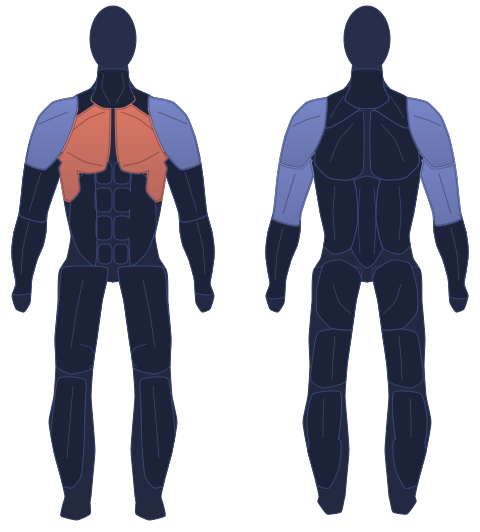
Barbell Bench Press (Medium Grip)Muscles Worked
The barbell bench press works your chest first, with your front delts and triceps helping to drive the bar up. The medium grip, with your forearms close to vertical at the bottom, spreads the work evenly across all three.
How to do it

- Lie on a flat bench with your eyes under the bar and your feet planted firmly on the floor.
- Grip the bar a little wider than shoulder width, so your forearms are close to vertical when the bar reaches your chest.
- Pull your shoulder blades back and down, then unrack the bar and hold it over your shoulders on straight arms.
- Breathe in and lower the bar under control to the middle of your chest, keeping your elbows at a moderate angle from your sides.
- Press the bar up and slightly back toward your shoulders until your arms are straight, breathing out as you finish.
- Rack the bar when your set is done, and keep a spotter nearby whenever you go heavy.
Form tips
- Keep your shoulder blades squeezed together and your upper back tight on the bench for the whole set.
- Touch your chest lightly with the bar instead of bouncing it off your ribs.
- Use a spotter or set the safety arms whenever you plan to push close to failure.
Why it made the list
No. 1 of 13
Best Chest Exercises
The gold standard. Highest chest EMG activation among pressing movements. Every gym has a bench. Barbell allows max loading for progressive overload.
More chest exercises

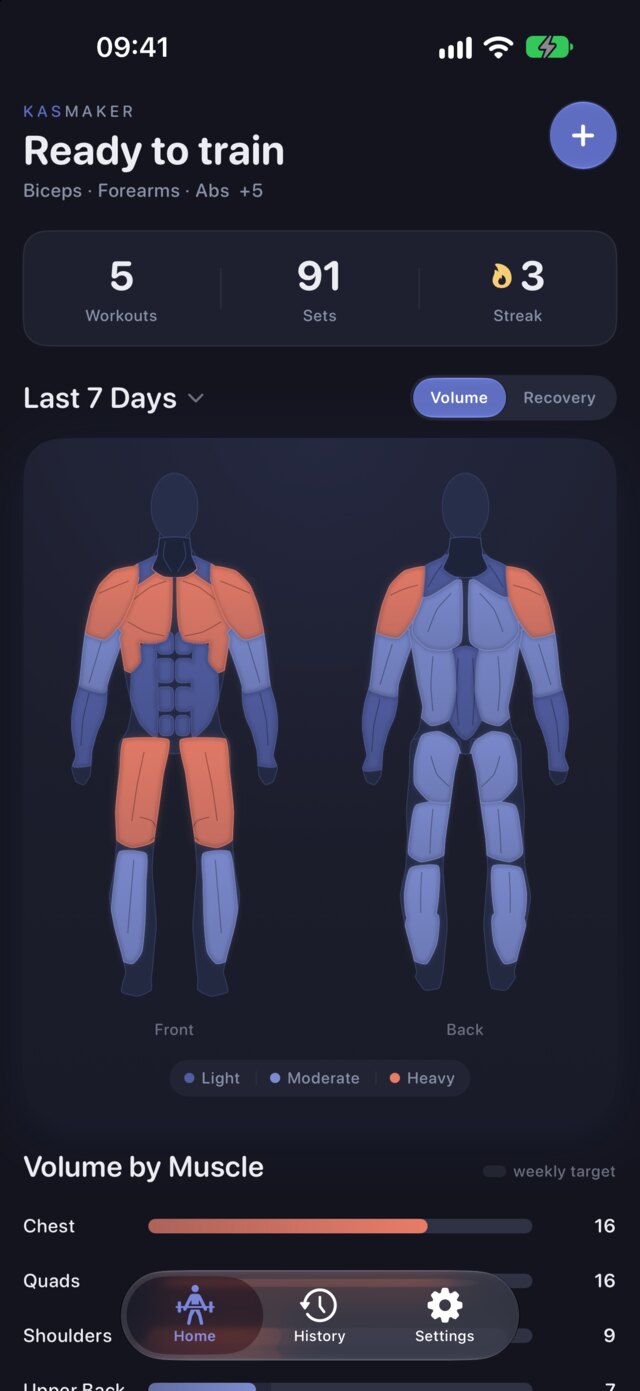
See it on your own body map
Log your Barbell Bench Press (Medium Grip) sets in KasMaker and watch your chest, shoulders, and triceps fill in on the map, weighted by how much you did. Logging and the body map are free on iPhone.