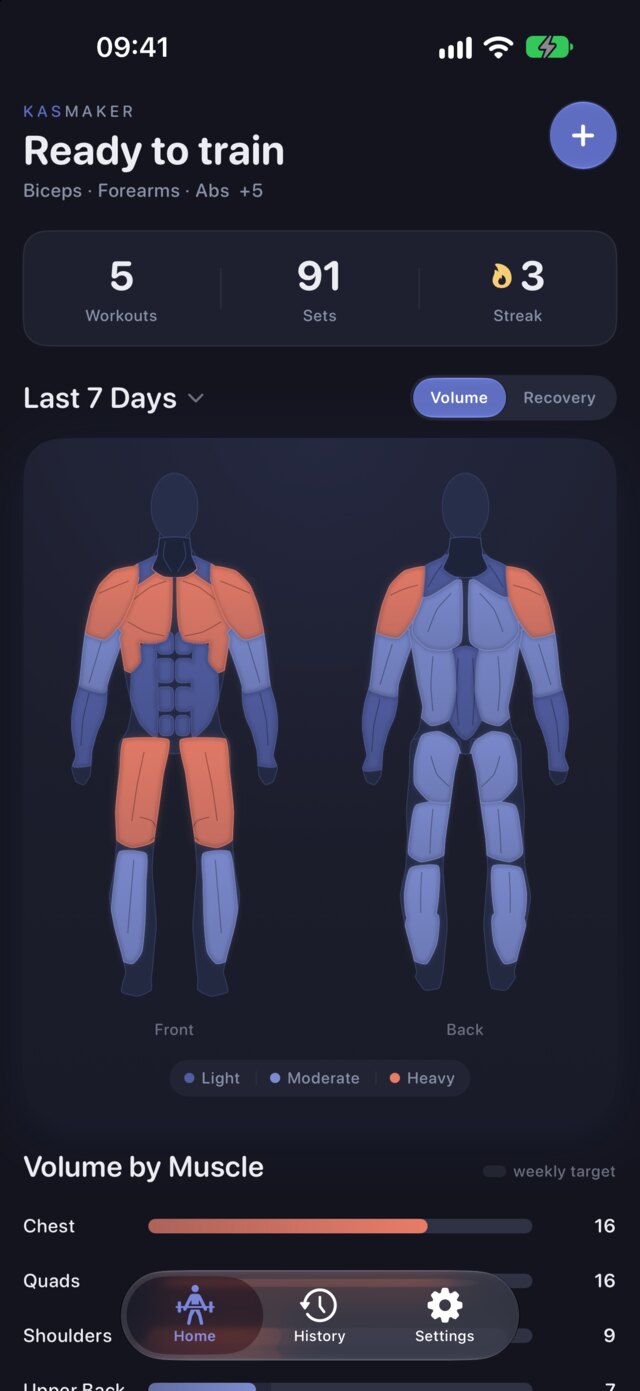
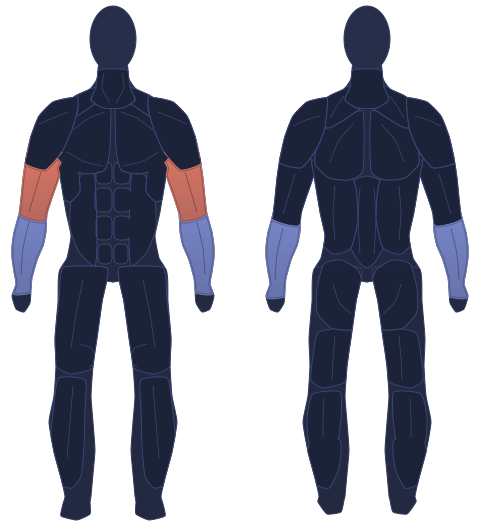
Reverse Barbell CurlMuscles Worked
The reverse barbell curl works your biceps and the brachialis underneath, and the overhand grip makes the brachioradialis, the thick muscle on top of your forearm, work much harder than in a regular curl. That's why it ranks among the best forearm exercises even though the biceps is the main mover.
How to do it
- Hold a barbell with an overhand grip, palms facing down and hands about shoulder width apart.
- Stand tall with your elbows at your sides and the bar resting against your thighs.
- Curl the bar up in an arc toward your shoulders, keeping your wrists straight and your elbows in place.
- Pause briefly at the top and squeeze.
- Lower the bar slowly until your arms are straight again.
Form tips
- Keep your wrists in line with your forearms; letting your knuckles drop back makes the rep harder to control.
- Use noticeably less weight than on your regular curl, since the overhand grip is the limiting factor.
- An EZ bar on the angled grips is a good swap if the straight bar is hard on your wrists.
Why it made the list
No. 5 of 10
Best Forearm Exercises
Hits the brachioradialis — the thick forearm muscle. Doubles as a bicep exercise. Overhand grip is the key differentiator.
More forearm exercises

See it on your own body map
Log your Reverse Barbell Curl sets in KasMaker and watch your biceps and forearms fill in on the map, weighted by how much you did. Logging and the body map are free on iPhone.