Alternating Floor PressMuscles Worked
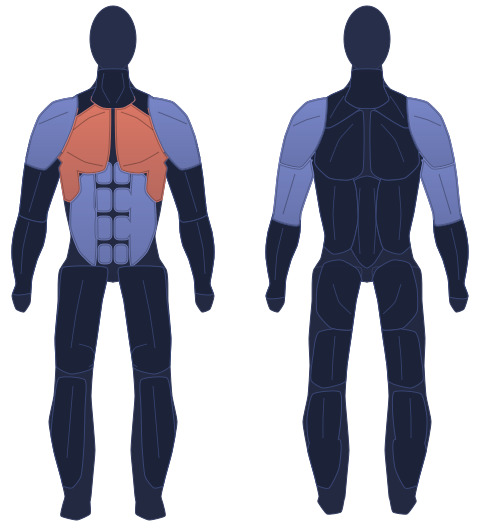
The alternating floor press works your chest, with your front delts and triceps helping, while your abs keep your torso from twisting as one kettlebell stays up and the other comes down. The floor stops your elbows at a shorter range than a bench would.
How to do it
- Lie on your back on the floor with your knees bent, feet flat, and a kettlebell beside each shoulder.
- Roll toward one side to bring a kettlebell onto your chest, then do the same with the other, holding each by the handle.
- Press both kettlebells up until your arms are straight, with the bells resting against the backs of your forearms.
- Keep one arm locked out and lower the other kettlebell until your upper arm meets the floor, then press it back up.
- Switch arms and keep alternating, holding the top arm steady above your shoulder the whole time.
Form tips
- Let your upper arm touch down softly instead of dropping it onto the floor.
- Keep your wrists straight so the handle sits low in your palm rather than bending your wrist back.
- Brace your abs so your hips and shoulders stay flat while your arms take turns.
Why it made the list
No. 13 of 13
Best Chest Exercises
Kettlebell floor press limits ROM to protect shoulders while still loading the chest. Unilateral work builds stability.
More chest exercises

See it on your own body map
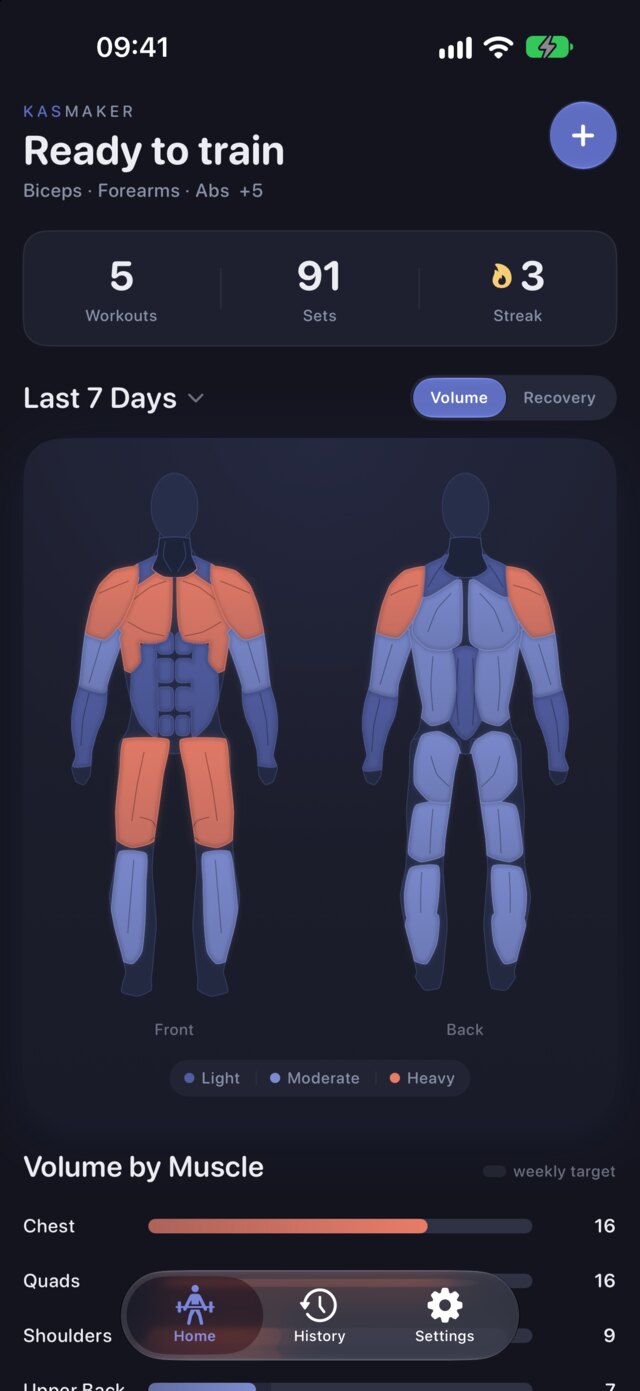
Log your Alternating Floor Press sets in KasMaker and watch your chest, abs, shoulders, and triceps fill in on the map, weighted by how much you did. Logging and the body map are free on iPhone.