Bodyweight Walking LungeMuscles Worked
Walking lunges work your quads first, with your glutes and hamstrings controlling each step down and helping you drive forward, and your calves keeping you balanced. Moving forward rep after rep adds a coordination and conditioning challenge that a stationary lunge doesn't have.
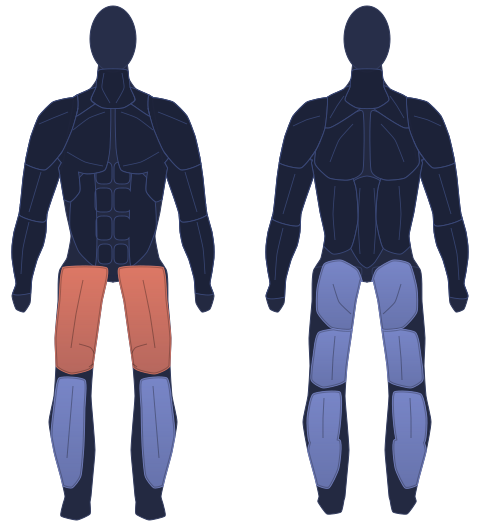
PrimaryQuads
- Level
- Beginner
- Type
- Compound
- Force
- Push
How to do it

- Stand tall, feet hip width apart, with your hands resting on your hips or by your sides.
- Take a long step forward and lower your hips until your back knee nearly brushes the floor.
- Keep your torso upright and your front knee stacked over the middle of your front foot.
- Push through your front foot to rise, bringing your back leg forward past it into the next step.
- Keep alternating legs as you walk forward at a steady, controlled pace.
Form tips
- Control the way down instead of dropping into each lunge, because your hamstrings and glutes do much of their work in that slow lowering.
- Keep your feet on two parallel tracks, like walking on train rails rather than a tightrope.
- Avoid pushing off the back foot to get up, and let the front leg do the lifting.
Why it made the list
No. 13 of 13
Best Quad Exercises
Bodyweight lunge variation. Dynamic movement that hits quads, glutes, and builds coordination.
No. 6 of 12
Best Hamstring Exercises
Hits hamstrings eccentrically during the lowering phase. Dynamic movement adds a conditioning element.
More quad exercises

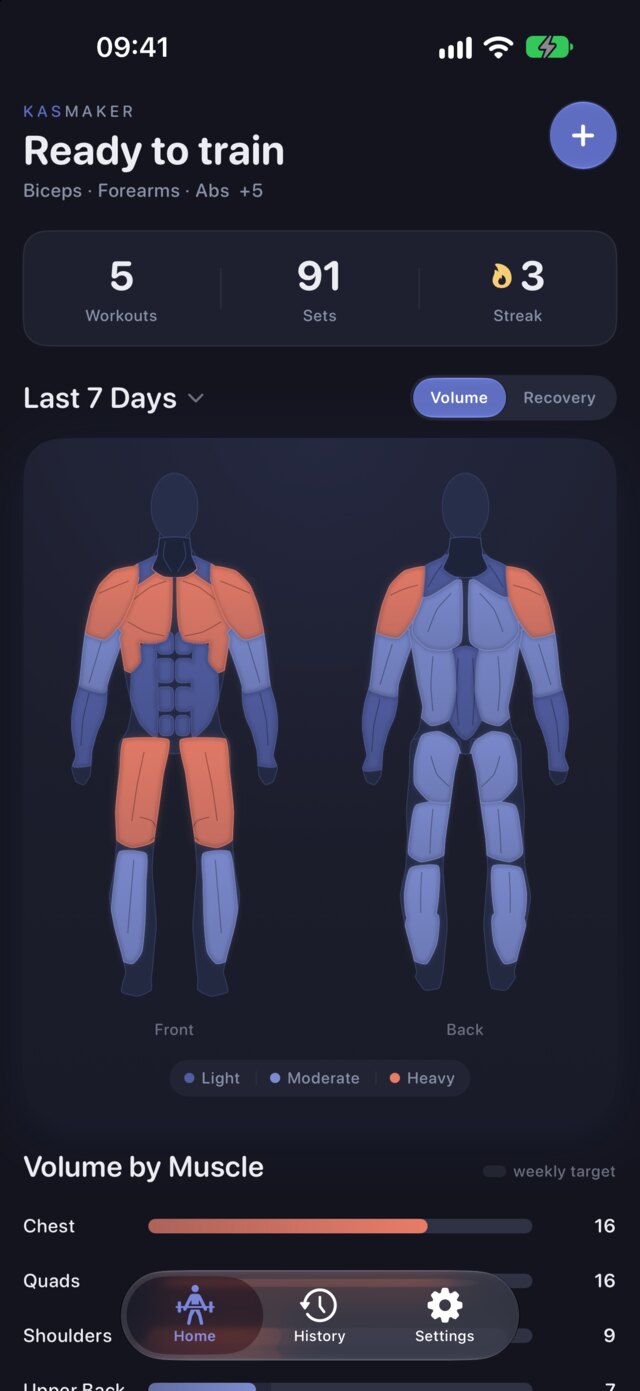
See it on your own body map
Log your Bodyweight Walking Lunge sets in KasMaker and watch your quads, calves, glutes, and hamstrings fill in on the map, weighted by how much you did. Logging and the body map are free on iPhone.