Chin-UpMuscles Worked
Chin-ups work your lats as the main mover, with the biceps doing more than in a pull-up and the forearms and upper back helping you hold on and finish each rep. The underhand grip puts your arms in a stronger position, so most people get more reps than with an overhand grip.
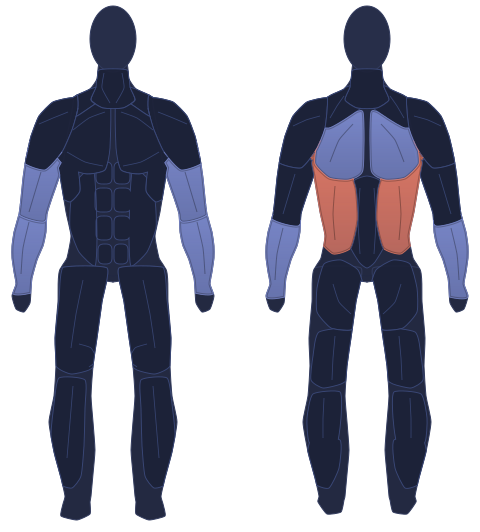
PrimaryLats
- Equipment
- Bodyweight
- Level
- Beginner
- Type
- Compound
- Force
- Pull
How to do it
- Grab the bar with your palms facing you, hands about shoulder width apart or slightly closer.
- Hang with your arms straight, ribs down and legs together, and set your shoulders by drawing them slightly down.
- Pull yourself up by bringing your elbows down and in front of your body until your chin passes the bar.
- Squeeze at the top for a moment, keeping your chest lifted toward the bar.
- Lower yourself slowly to a full hang before starting the next rep.
Form tips
- Keep your elbows pointing forward rather than flaring out, which keeps the pull smooth and strong.
- Don't crane your neck to get your chin over the bar; bring your chest up instead.
- A full hang at the bottom of every rep gives your lats and biceps their full stretch.
Why it made the list
No. 3 of 12
Best Lat Exercises
Supinated grip shifts some emphasis to biceps while still crushing lats. Often easier than pull-ups, making it more accessible.
More lat exercises

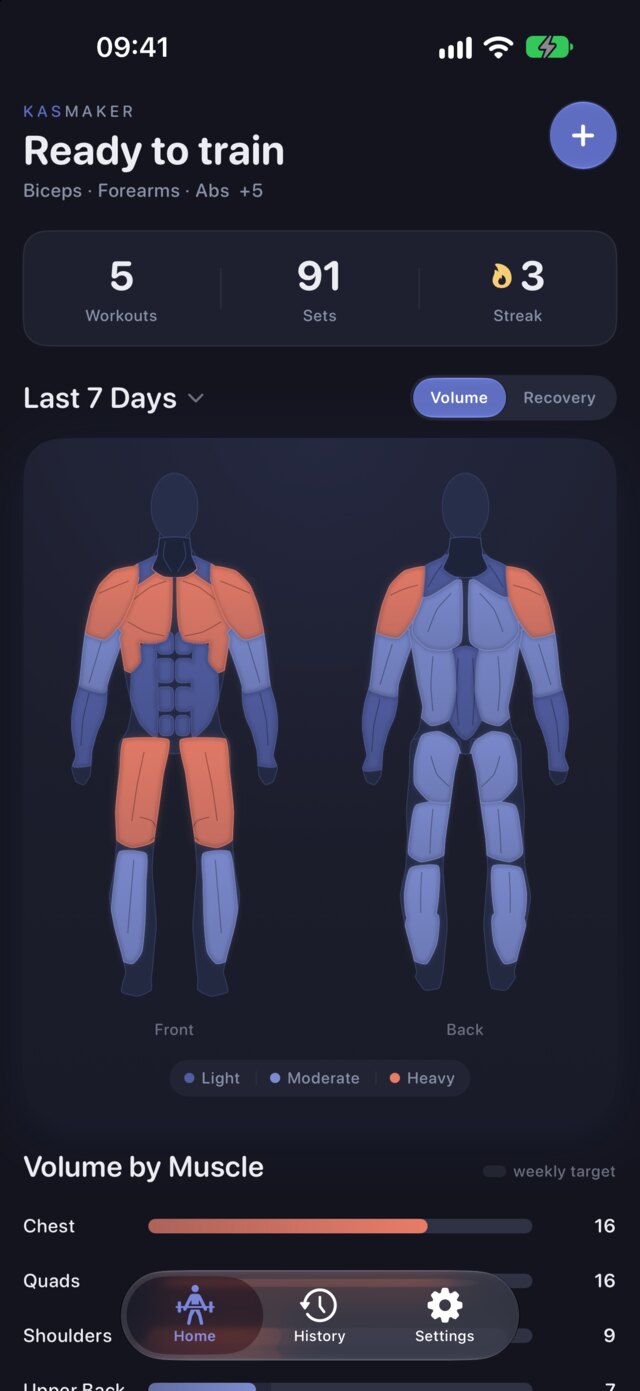
See it on your own body map
Log your Chin-Up sets in KasMaker and watch your lats, biceps, forearms, and upper back fill in on the map, weighted by how much you did. Logging and the body map are free on iPhone.