Best Upper Back Exercises12 Picks, Ranked
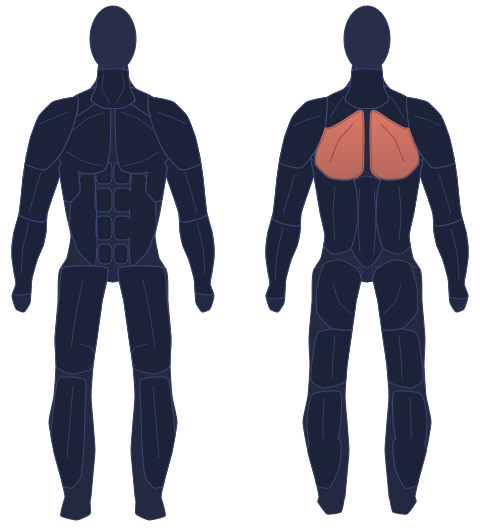
Upper back here means the muscles between and around your shoulder blades: the rhomboids and the middle and lower trapezius. They pull the shoulder blades together and down, and hold them steady while you press and lift. Rows are their main pattern, so the choice comes down to how you row: free weights or a machine, one arm or two, chest supported or bent over, and which grip. Squeezing your shoulder blades together at the top of each rep keeps the work in the upper back.
- Weekly working sets
- 8–25
- The weekly range KasMaker measures upper back volume against. Fewer is a light week; more is past what most lifters recover from.
- Recovery window
- ~72 hours
- The base time KasMaker's recovery map allows for upper back to recover, scaled up or down by how much you did.
The list
The list mixes barbell, dumbbell, cable, machine and bodyweight rows. Pick one or two from the top as staples, such as Bent Over Barbell Row or One-Arm Dumbbell Row. Then add a variant with a different setup, like Seated Cable Rows or the chest-supported Dumbbell Incline Row. Rows also train your lats and rear delts, so they pull double duty. Progress over the weeks with small jumps in weight or reps while your shoulder blades still move through a full range.
Covers: Rhomboid major and minor, plus the middle and lower fibers of the trapezius.
Bent Over Barbell Row
The squat of back training. Highest load capacity for horizontal pulling. Hits rhomboids, mid-traps, rear delts.
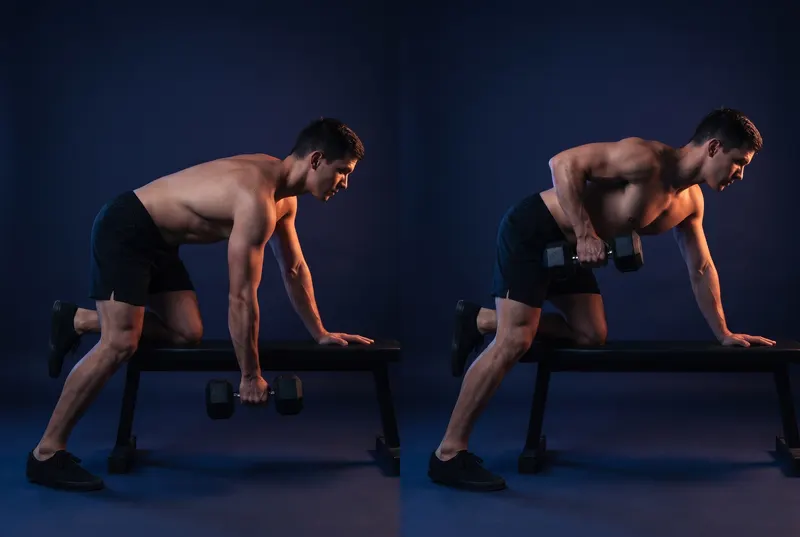
One-Arm Dumbbell Row
Unilateral rowing, fixes imbalances. Supported version is one of the most commonly performed back exercises.
Seated Cable Rows
Constant tension horizontal pull. Machine-guided so easy to learn. Excellent for mind-muscle connection.
T-Bar Row with Handle
Allows heavy loading in a more stable position than bent-over rows. Very popular in bodybuilding.
Bent Over Two-Dumbbell Row
Two-arm dumbbell row for bilateral work. Great for building thickness across the entire mid-back.
Inverted Row
Bodyweight horizontal pull. Great for beginners and as a warm-up. Progressable by changing body angle.
Reverse Grip Bent-Over Rows
Supinated grip shifts emphasis to the lower lats and biceps while still hitting the mid-back. Variation for complete development.
Dumbbell Incline Row
Chest-supported rowing eliminates lower back involvement. Allows pure mid-back focus without fatigue limiting the set.
Leverage High Row
Machine row for controlled, heavy pulling. Guided path is ideal for beginners or burnout sets.
One-Arm Kettlebell Row
Kettlebell row with a thicker handle challenges grip while training the mid-back. Functional and effective.
Seated One-arm Cable Pulley Rows
Unilateral cable row addresses left/right imbalances with constant cable tension.
Smith Machine Bent Over Row
Smith machine provides a fixed bar path for rows. Good for learning the row pattern safely.
Other muscle groups

See how much each muscle is getting
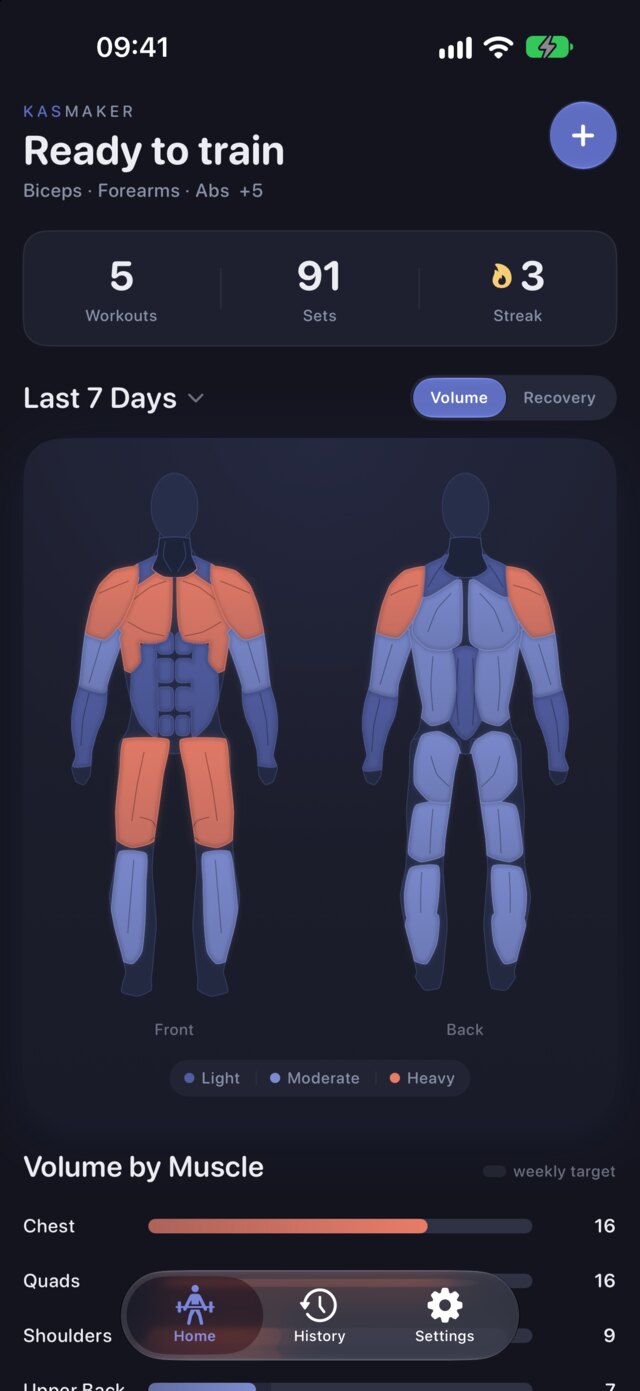
KasMaker colors every muscle on a body map by how much you've trained it, so you can tell at a glance whether your upper back got enough work this week. Logging and the body map are free on iPhone.