Best Trap Exercises12 Picks, Ranked
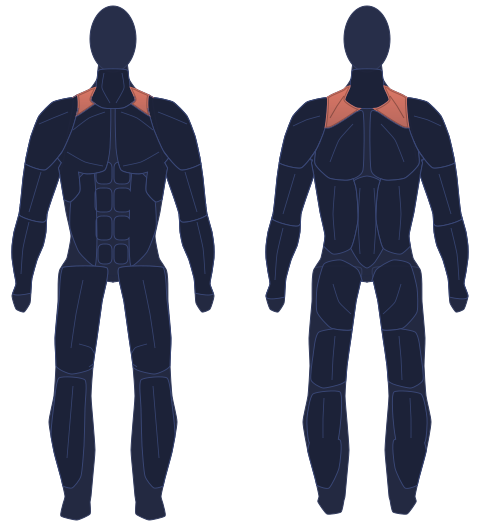
Traps here means the upper trapezius, the slope of muscle that runs from your neck out to the tops of your shoulders. Its main job is to lift and rotate your shoulder blades, as when you shrug or raise your arms overhead. Shrugs train that lifting motion most directly, and they can be loaded heavily with barbells, dumbbells or machines. Upright rows and high pulls add the traps' role in raising the arms, and they bring the side delts in too.
- Weekly working sets
- 4–20
- The weekly range KasMaker measures traps volume against. Fewer is a light week; more is past what most lifters recover from.
- Recovery window
- ~48 hours
- The base time KasMaker's recovery map allows for traps to recover, scaled up or down by how much you did.
The list
The list mixes barbell, dumbbell, cable, machine and kettlebell options. Pick one or two from the top as staples, such as Barbell Shrug or Dumbbell Shrug. Then add a variant that changes the angle or the tension, like Cable Shrugs or Upright Barbell Row. Your traps also work hard in deadlifts and carries, so plan your direct sets around those. Pause at the top of each shrug, then progress slowly over the weeks with more weight or reps.
Covers: Upper trapezius, the fibers running from the base of the skull and the neck to the outer collarbone.
Barbell Shrug
The definitive trap exercise. Allows the heaviest loading. Simple — shrug up, squeeze, lower. Everyone knows it.
Dumbbell Shrug
Allows more natural arm positioning than barbell. Slightly more ROM since dumbbells can travel to the sides.
Barbell Shrug Behind The Back
Shifts emphasis slightly to the mid/lower traps compared to front shrugs. Variation for complete trap development.
Upright Barbell Row
Compound that hits traps AND lateral delts. More functional than shrugs alone. Narrower grip = more trap emphasis.
Cable Shrugs
Constant tension through ROM. Covers the cable equipment slot. Great for high-rep burnout sets.
Leverage Shrug
Machine shrug provides a guided path. Easy to load heavy without grip being a limiting factor.
Upright Cable Row
Cable upright row provides constant tension for traps and lateral delts. Smoother than barbell version.
Calf-Machine Shoulder Shrug
Using the calf raise machine for shrugs. Allows very heavy loading with no grip limitation.
Standing Dumbbell Upright Row
Dumbbell upright row allows a more natural wrist path than barbell. Easier on the shoulders.
Scapular Pull-Up
Bodyweight trap activation. Hang from a bar and shrug the scapula down. Builds trap control and pull-up strength.
Smith Machine Behind the Back Shrug
Smith machine provides a fixed path for behind-the-back shrugs. Safe for heavy loading.
Kettlebell Sumo High Pull
Explosive kettlebell movement that hits traps through a dynamic pull. Combines conditioning with trap work.
Other muscle groups

See how much each muscle is getting
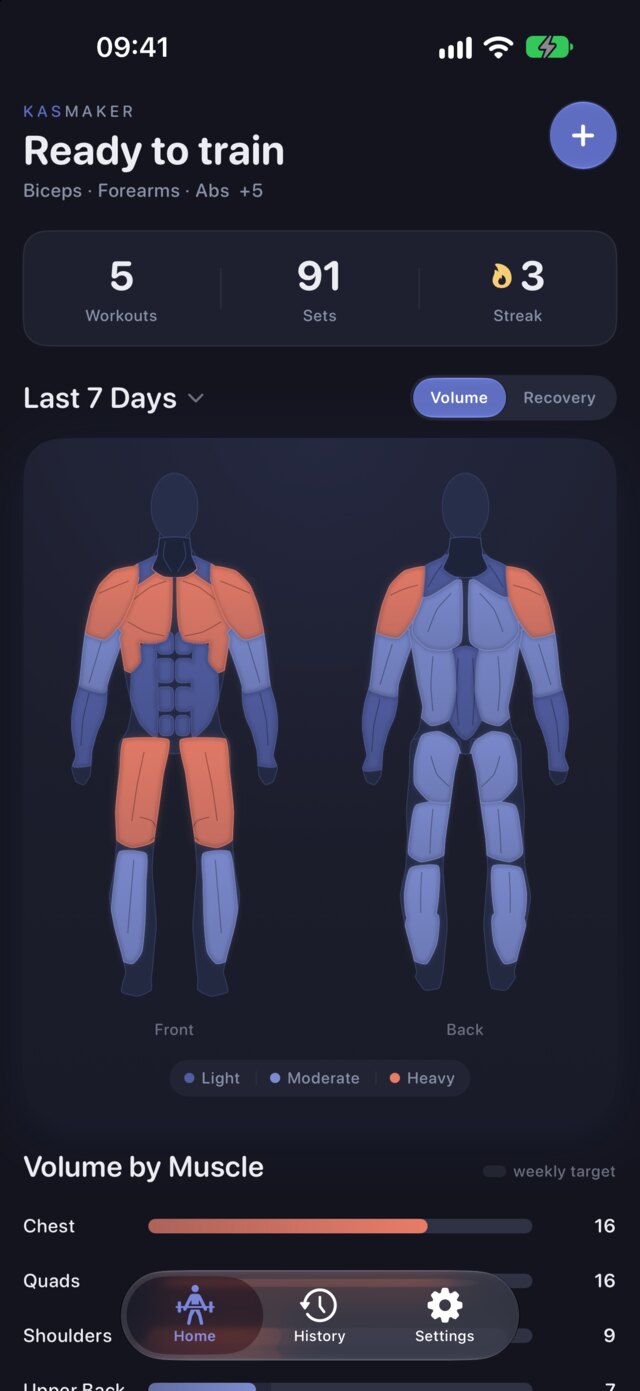
KasMaker colors every muscle on a body map by how much you've trained it, so you can tell at a glance whether your traps got enough work this week. Logging and the body map are free on iPhone.