Best Lower Back Exercises10 Picks, Ranked
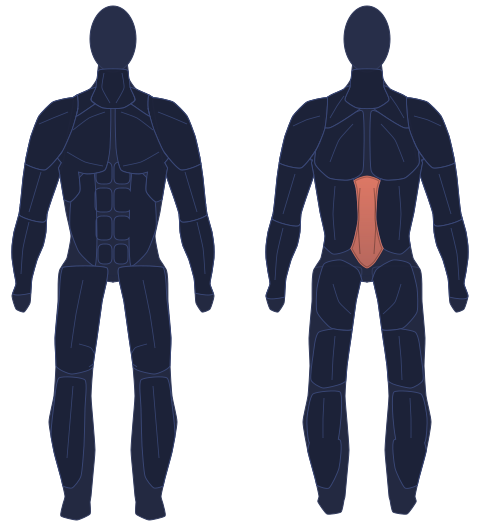
Your lower back is mainly the erector spinae, two columns of muscle that run along either side of your spine. They straighten your torso from a bent-over position and keep your spine steady while you lift, carry and hinge. That is why hip hinges lead this list: deadlifts and good mornings load these muscles while they hold the spine firm, and back extensions move them through a range with less load. Smooth, controlled reps are the priority here.
- Weekly working sets
- 4–14
- The weekly range KasMaker measures lower back volume against. Fewer is a light week; more is past what most lifters recover from.
- Recovery window
- ~72 hours
- The base time KasMaker's recovery map allows for lower back to recover, scaled up or down by how much you did.
The list
The list mixes barbell lifts with bench and bodyweight options. Pick one or two from the top as staples, such as Barbell Deadlift or Hyperextensions (Back Extensions). Then add a variant that changes the range or the equipment, like Rack Pulls for the top half or Superman for training at home. Your lower back also works during squats and rows, so count that work too. Build up gradually over the weeks, adding a little weight or a few reps at a time.
Covers: Erector spinae (iliocostalis, longissimus and spinalis) where they run through the lower back.
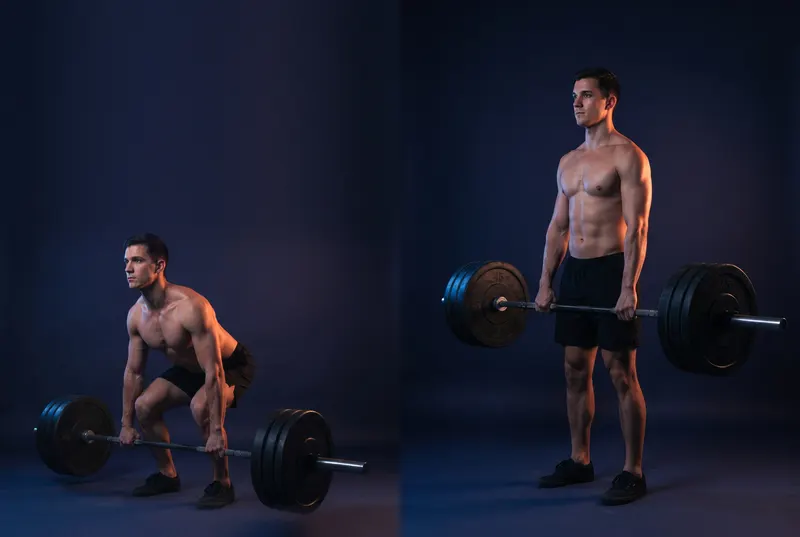
Barbell Deadlift
The most important posterior chain exercise. Hits lower back, glutes, hamstrings, traps, forearms. Non-negotiable #1.
Hyperextensions (Back Extensions)
Best isolation-style movement for the erector spinae. Every gym has a Roman chair. Safe, controlled, beginner-friendly.
Stiff Leg Barbell Good Morning
Barbell hip-hinge that loads the erectors directly. Popular in powerlifting for posterior chain strength.
Superman
Zero equipment bodyweight erector spinae exercise. Good for home workouts and beginners. Universally prescribed by physios and trainers.
Rack Pulls
Partial deadlift from knee height. Allows heavier loading of the lockout where lower back works hardest. Builds deadlift strength and back thickness.
Deficit Deadlift
Standing on a platform increases ROM at the bottom. Builds lower back and hamstring strength from a deeper position.
Seated Good Mornings
Seated position isolates the lower back by removing hamstring contribution. Targeted erector spinae work.
Hyperextensions With No Hyperextension Bench
Bodyweight back extension variation without specialized equipment. Effective for home training.
Pelvic Tilt Into Bridge
Bodyweight lower back and glute activator. Beginner-friendly, often used in rehab and warm-ups.
Weighted Ball Hyperextension
Exercise ball back extension adds instability for core engagement. Good for home gyms with minimal equipment.
Other muscle groups

See how much each muscle is getting
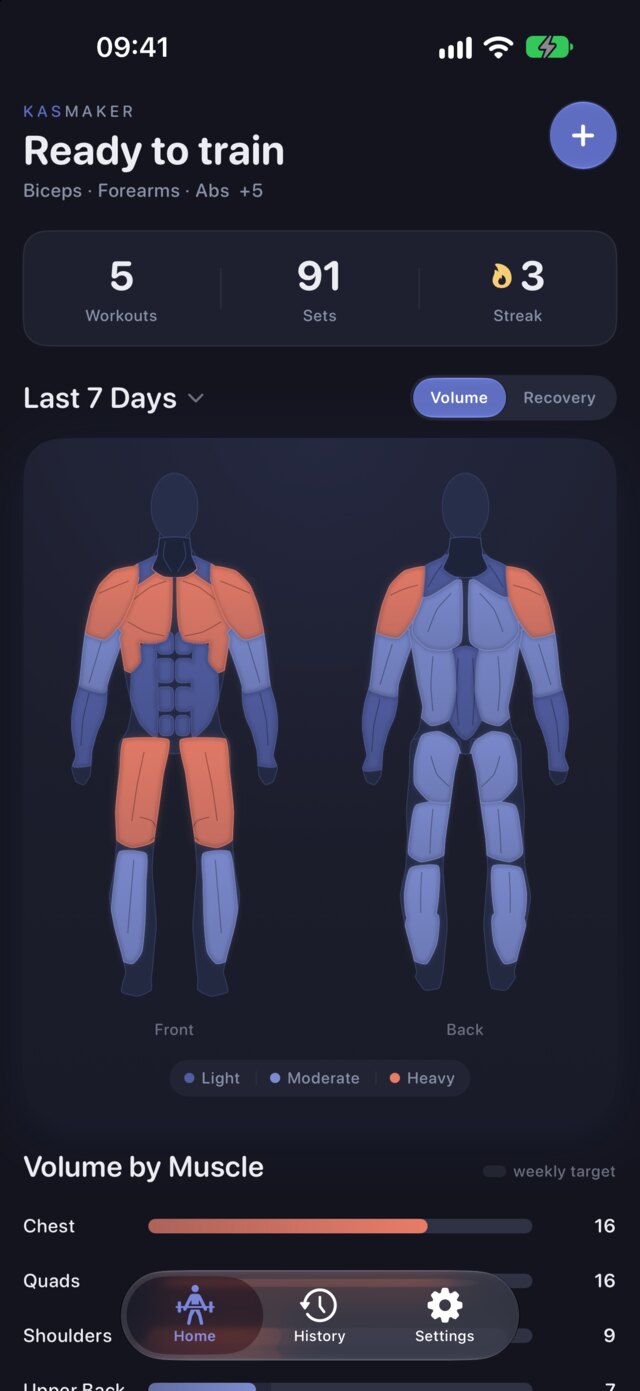
KasMaker colors every muscle on a body map by how much you've trained it, so you can tell at a glance whether your lower back got enough work this week. Logging and the body map are free on iPhone.